Advertisements
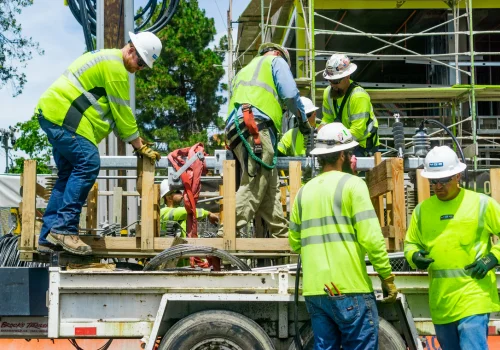
The construction sector in the US is experiencing a disastrous shortage of labor, which is leaving unmatched opportunities to the foreign workers to legally immigrate to the United States. The construction companies in America are also in the process of recruiting foreign workers to cover the acute labor requirements since there are 130,716 H-2B visas that will be available in fiscal year 2025.
This guide gives you all the information you need to know about moving to the USA under the H-2B Construction Visa Program, such as eligibility, application procedure, and the expected amount of earnings.
Knowing the H-2B Visa: Your Key to American Construction Work.
The H-2B is a non-agricultural worker temporary visa that enables employers in the U.S. to attract foreign workers into America to work seasonally, during peak loads, as intermittent employees, or even as a one-time worker. To construction workers, this implies that they can work on residential home construction projects, commercial and infrastructural projects.
Advertisements
Key Features:
The visa is employer-sponsored that is, you need a U.S. employer petition on your behalf before you can apply. It is short lived and project related and connected to particular construction work having set time limits. The maximum duration of stay is three years after which you have to leave the United States at least 60 days before you can reapply. Although you can not directly apply to permanent residence using H-2B status, the experience and network you create can create other immigration avenues.
Revolutionary 2025 Changes: Why This Year Is Different.
- New reforms have opened up H-2B program as never before:
- Removal of Country Restrictions: Country list Not a country list any more but any worker can now apply.
- Increased Worker Mobility: Employment portability also enables you to change jobs without permission, after a new H-2 petition has been submitted.
- New Grace Periods: All workers are given 10 days prior to the commencement of the work, 30 days following the termination of the work, and not exceeding 60 days in case a job is terminated before the stipulated time.
- Greater Worker Protection: No recruitment fee can be imposed and whistleblower protection is not allowed to retaliate against the worker who reports violations.
- Green Card Clarity: You will no longer have to worry that your application to permanent residence will hurt your H-2B status.
What Construction Jobs are eligible to H-2B Visas?
The program encompasses a very wide scope of construction jobs that do not need advanced degrees or professional license:
Qualifying Positions: General construction laborer, construction helper, demolition worker, concrete worker, roofing helper, painting and finishing worker, and landscaping/site preparation worker.
Non-Qualifying Positions: Licensed electricians, plumbers, HVAC technicians (need H-1B visa), supervisory jobs with a lot of management experience, year-round positions, and professional jobs such as engineers or architects.
The most important difference is that H-2B construction work is a temporary work, and it does not need professional licensing, but experience and physical ability are appreciated.
How Much Will You Earn? Deconstruction of Construction Wages.
H-2B visa workers must be paid the current wage in their occupation and the current wage in their location and this is a law that safeguards the foreign and American workers as well as the American workers are paid what they deserve.
Hourly Wage Reality in 2025:
The average hourly wage that construction laborers have is between 12 and 18 dollars depending on employment and location. The median hourly wage of the H-2B workers in all sectors is 20.64, with a range of 16.35 to 23.56 at the 25 th percentiles and 75 th percentiles respectively.
Regional Variations:
Construction laborers at the entry level make between $13-16 in the lower cost states such as Louisiana, Mississippi and Arkansas; between 16-20 in the mid cost states such as Texas, Georgia and North Carolina; and between 20-25 in the high cost states such as California, New York and Massachusetts.
Skilled construction laborers may be paid between $18 and 22 per hour in cheap areas and between 22 and 28 per hour in expensive cities.
Annual Potential Earnings
Suppose full time employment (40 hours a week, 50 weeks):
At 15/hr: about 30,000 per year.
At 18/hours: about 36000 in a year.
At $20/hour: about 40,000 yearly.
At the cost of 24/hour: around 48000 a year.
Other Income sources:
Most of the construction works are on overtime and this is usually paid 1.5 times your usual hourly salary. Another 10 hours of overtime work at the base pay of $18/hour will increase your annual income by about $13,500 to put you at about 49,500.
Other employers offer accommodation or housing allowances, which makes the cost of living to be very low. The mode of transport to and out of the job sites is usually provided.
After-Tax Reality:
You will pay federal income tax (10-12 percent on average) and Social Security and Medicare taxes (7.65 percent together) as well as state income tax (0-13 percent depending on the state). Once taxes are paid, you will be left with about 70-75 percent of your gross income. You would earn about 28000-30000 at 20/hour (40,000/year).
The H-2B Visa Process: Application.
Critical Understanding: You are not able to apply directly to an H-2B visa. It has to be initiated by an employer of the United States who wishes to employ you.
Step 1: Employer Receives Temporary Labor Certification.
The employer within the U.S. should seek approval with the Department of Labor whereby he or she proves that there are no sufficient and qualified U.S. employees and the employment of foreign employees would not have any negative impact on the American wages and working conditions. The process normally requires 60-120 days.
Step 2: Petition Form I-129 Employer Files.
The employer submits Form I-129 with U.S. Citizenship and Immigration Services (USCIS) upon receiving the approval of labor certification along with your biographical details and qualifications. Processing takes 30-90 days.
Step 3: You Apply for the H-2B Visa
After USCIS gives the green light to the petition, you request your H-2B visa at an embassy or a consulate in the United States.
Documents needed: Valid passport (must have a 6-month validity period beyond planned stay), Form DS-160 (Online Nonimmigrant Visa Application), receipt of visa application fee (around 190 dollars), approved Form I-129 petition notice, original Temporary Labor Certification, passport-sized photographs, demonstration of your ties to your motherland, and demonstration of your intention to go home after the work.
You will also be interviewed during a visa interview where you will be discussing your background, job offer and intentions. Your visa will be issued in 5-14 days in case of approval.
Step 4: United States Admission.
U.S. Customs and Border Protection officers inspect your visa and documents and decide how long you are to remain. Upon admission, you are allowed to start working with your sponsoring employer.
Listing U.S. Construction Employers Sponsoring H-2B Visas.
High Construction Industry Workers in H-2B: Residential construction, commercial construction, landscaping and site preparation, concrete and foundation work, roofing and exterior finishing, and resort/hotel construction.
How to Find Opportunities:
Use legitimate H-2B recruiting agencies (check credentials thoroughly – do not pay recruitment fees). On job boards such as Indeed, Glassdoor and Linked In, search with key terms such as H-2B construction or seasonal construction worker. Visit the Foreign Labor Certification Data Center of the Department of Labor to check the names of companies that have just been given H-2B certifications. Direct contact with construction companies in high growth states such as Texas, Florida, Arizona, and North Carolina. Connect with individuals of your country who have worked on H-2B visas before.
Red Flags to Watch out: Anyone who wants payments to get a job, claims of a assured visa, unclear communication, initial requests of personal financial details and employers who cannot give clear project details.
Life in America: Expectations.
Housing Costs:
- Sharing an apartment/room in less expensive neighbourhoods: $400-700 monthly.
- Sharing in mid-range cities: $700-1000 per month.
- Co-op living in costly cities: $1,000-1,500+ monthly.
Other Living Expenses:
Food and groceries: $200-$400 per month. Transportation: $50-$150 per month. Utilities: $50-100 per month (yours). Phone and internet: $40-$80 per month. Personal expenses: $100-$300 per month.
Monthly Living Costs: $840-2,130, which greatly depends on the place and the way of living.
Cultural Adjustment:
The culture of American work place is characterized by punctuality, straight forwardness, and efficiency. Safety rules are extremely strict at the construction sites (hard hats, safety glasses, steel-toed boots are obligatory). The simple knowledge of English language is a great boost to your experience and chances of getting better-paid jobs.
Path to Longer-Term Status
You may not apply to readmission without spending a minimum of 60 days out of the U.S. after three years of being in the H-2B status. The supplemental visas are however reserved to returning workers who had H-2B status within the past three fiscal years, which will provide you with a priority access.
Potential Pathways:
In case you acquire special skills, then you may be eligible to receive an H-1B visa or shift to EB-3 work-based green cards in case an employer sponsors you to permanent residency. Marriage to a permanent resident or citizen of the United States provide family based immigration opportunities.
Even temporary jobs develop useful construction experience, professional contacts, U.S. dollars saved, and proficiency in the English language.
Your Legal Rights and Protections.
You, being an H-2B Worker, are entitled to: Compensation of at least the current wage which is set out in your employment offering. Pay overtime (1.5 times normal rate) for the hours that exceed 40 hours per week. Fighting on all labor laws of the U.S., work safety laws. Protections against whistleblowing in case of violations. Your employer is not allowed to take your passport or impose any recruitment fee.
If Problems Arise: Report wage theft or unstable conditions to the Department of Labor Wage and Hour Division. Report fraud/abuse to USCIS. Find the help of legal aid organizations, which assist immigrant workers. The regulations of the USCIS under 2025 permit refusal of the H-2B petitions in case the employer has violated the labor laws in a serious way.
The H-2B Construction Visa- Is It Right?
This May Be Right for You If: You possess experience in construction or physical ability to do strenuous work. You can work hard in possibly difficult conditions. You desire to make money in U.S. dollars and take care of your family. You are flexible and will be able to cope with temporary residence in a foreign country. You are familiar with the temporary (not more than three years, and then required break). You are connected well with your home country and you really intend to come back.
This is Not the Right One To You When: You are applying to be permanently immigrated to the U.S. (H-2B is temporary). You are professionally qualified under higher-skilled visa. You can not physically demand construction labor. You can not have lengthy separation of the family.
Making a Difference: What to Do Next.
Immediate Actions:
Begin to study or learn English- even basic conversation skills would increase your chances dramatically. Recruitment in high growth states of the U.S. Establish contacts with bona fide H-2B recruitment agencies. Start to collect the necessary papers (passport, birth certificate, work references). Make money in advance (travel, housing, expenses until your first paycheck).
Short-term (1-3 months) Preparation:
Seek employment using legit methods. Write a basic resume with a focus on building or work experience. Get simple construction safety certifications where you can. Make sure that your passport is not expired.
Summary: Your American Construction Opportunity Awaits.
The H-2B Construction Visa program, which will be in effect in 2025, is a legitimate, legal way to allow the foreign workers to temporarily move to the United States, earn competitive wages in U.S. dollars, get valuable experience, and create a better future to themselves and their families.
The total H-2B visas are 130,716 and construction companies are in need of workers, so the chances are more than ever. This is now a safer and friendlier program to the workers due to the improved worker protections.
It takes research, preparation, patience and working with legitimate employers that operate within the U.S. law in order to succeed. It is not a simple process, yet with the workers who are motivated and are ready to work hard H-2B Construction Visa is a real chance to work legally in America and earn much more than could be earned in their country of origin.
American construction sector requires labour force. The question: are you prepared to take the call?
Thank you so much for reading. We will appreciate it if you share this with your loved ones.
Advertisements